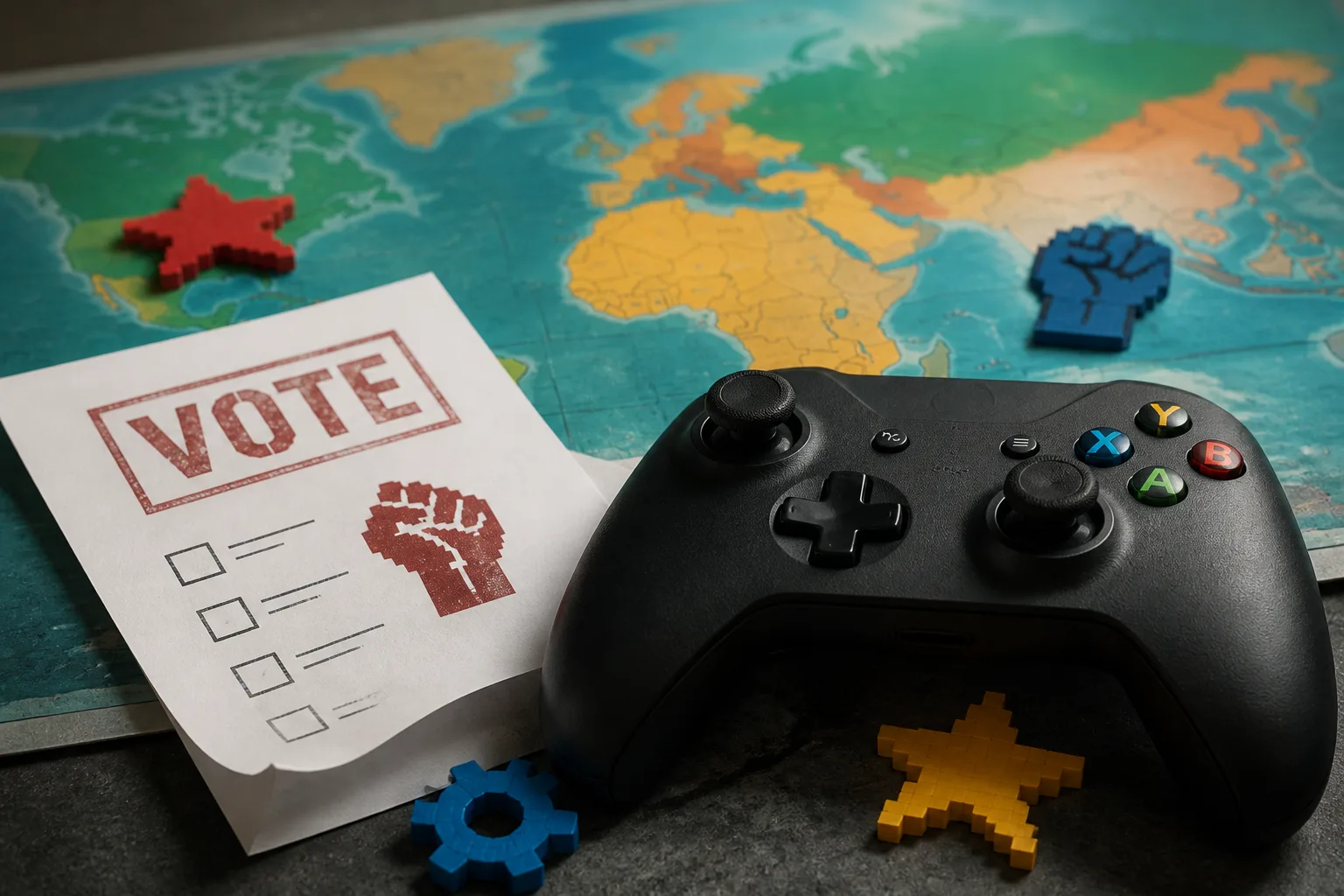
Video Games, Polling, and Propaganda: How Gaming Shapes Global Politics
George E. Osborn, a veteran of the video‑game industry and author of Power Play, argues that the relationship between gaming and politics is deeper than most observers realize. In a recent interview with Indy100, Osborn outlined three concrete cases that illustrate how video‑game platforms have been used to influence political outcomes, spread state propaganda, and even feed extremist ideologies.
The first example concerns the 2024 U.S. presidential election. Osborn says a polling firm—identified as JL Partners, founded by James Johnson—used incentives in mobile games to reach voters who were otherwise hard to survey. According to Johnson, the firm awarded in‑game points to players who answered poll questions. This method was reported to increase participation among “young, non‑white men,” a demographic that had been under‑represented in traditional polling. Johnson’s data showed that 30 % of the non‑white sample supported Donald Trump, a figure that matched the firm’s overall results for the candidate.
The second case involves the Russian private‑military company Wagner Group. After the group’s leadership was disrupted in 2023, the organization continued to operate under new command. Wagner has a history of using propaganda to support its operations in Africa. Osborn cites a streamer known as Grisha Putin, who collaborated with Wagner to broadcast gaming streams that promoted pro‑Russia and anti‑Western narratives. The streams reached audiences within gaming communities and attracted coverage from Western media, amplifying the messages beyond the original viewers.
The third example addresses the use of video‑game aesthetics by extremist groups. Osborn describes a phenomenon he calls the “gamification of terror.” In this model, the visual and interactive elements of video games are adopted by online communities that espouse violent or misogynistic ideologies. These groups use game‑like mechanics to create a sense of identity and cohesion among young men who feel alienated. Osborn argues that this approach is analogous to the football hooliganism of the 1970s and 1980s, but it operates in digital spaces.
Osborn’s book, released in hardback, draws on more than 15 years of industry experience and academic training at the University of Cambridge. He emphasizes that the examples he presents are not isolated incidents; they reflect broader trends in which gaming platforms are leveraged for political influence, propaganda, and radicalization.
Industry analysts note that the use of mobile games for polling is part of a growing trend toward “gamified” data collection. Companies such as Zigpoll and Pollfish have built tools that embed surveys within games, citing higher response rates and broader demographic reach. However, the practice raises questions about data privacy and the representativeness of samples.
In the case of Wagner Group, the use of gaming streams aligns with Russia’s broader information‑operations strategy. The group’s activities in Africa have been documented by multiple sources, including reports from the U.S. State Department and investigative journalism outlets. The streamer Grisha Putin’s collaboration with Wagner illustrates how state actors can exploit the popularity of gaming to disseminate propaganda.
The “gamification of terror” phenomenon is less well understood by mainstream media. Osborn’s analysis suggests that extremist groups deliberately adopt game mechanics to attract and retain members. While the link between video‑game play and violent crime remains contested, the aesthetic overlap between games and extremist rhetoric is a subject of ongoing research.
Overall, Power Play presents evidence that video‑game platforms are increasingly being used as tools for political influence, propaganda, and radicalization. The book calls for a nuanced understanding of how gaming ecosystems intersect with broader societal issues.
The publication of Power Play has sparked discussion among scholars, pollsters, and security analysts. As the gaming industry continues to grow, the intersections highlighted by Osborn are likely to receive further scrutiny from regulators and the public.