Valve Launches Steam Machine: A Compact PC-Console Hybrid with AMD Zen 4 Power
Valve Corporation announced the arrival of its new Steam Machine on June 29 2026, positioning the device as a space‑saving gaming console that delivers PC‑level performance. The system runs SteamOS 3.0, a Linux‑based operating system that supports both a console‑style interface and a full desktop environment. Valve says the machine is intended for gamers who want a console‑like setup without sacrificing the flexibility of a PC.
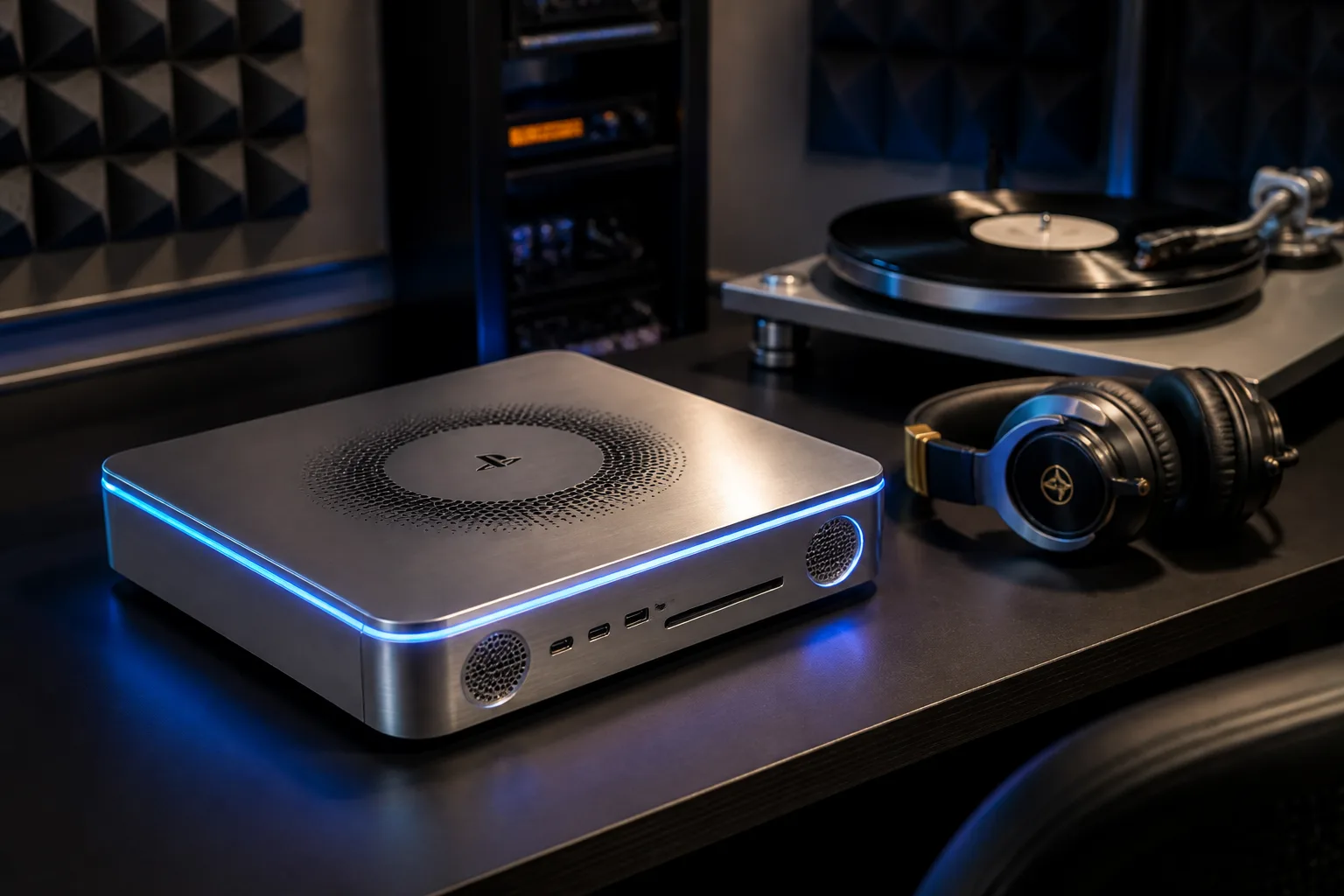
The Steam Machine’s design emphasizes practicality and personalization. It is smaller than an Xbox Series X and includes a built‑in power supply, eliminating the need for an external brick. Users can attach magnetic faceplates in walnut, Half‑Life orange, or other styles, and a front‑panel RGB LED bar can be customized through SteamOS settings. The chassis also features a rear fan and a large heat sink to keep temperatures low during extended play.
Under the hood the device is powered by a custom AMD Zen 4 CPU with six cores and twelve threads that can boost to 4.8 GHz. The GPU is an AMD RDNA 3 unit with 8 GB of GDDR6 memory. The system ships with 16 GB of DDR5 RAM. Storage options include a 512 GB or a 2 TB M.2 SSD, and a microSD slot allows for additional expansion. Connectivity is comprehensive: USB 3.2 ports, a USB‑C port, HDMI and DisplayPort outputs, Gigabit Ethernet, Wi‑Fi 6E, and Bluetooth 5.3.
Performance tests carried out by ETA Prime show that the Steam Machine can run demanding titles such as Cyberpunk 2077, The Witcher 3, Red Dead Redemption 2, and Mortal Kombat 1 at 1080p and 1440p with smooth frame rates. The system also supports 4K output through scaling. Valve has committed to regular software updates, including the upcoming FidelityFX Super Resolution 4, which is expected to improve performance further.
Beyond gaming, the Steam Machine’s desktop mode allows users to perform productivity tasks such as video editing, photo editing, and web browsing. The device supports a wide range of controllers, including Xbox, PlayStation, and Nintendo Switch models, and it can run Windows games through Valve’s Proton compatibility layer.
Pricing starts at $1,049 for the 512 GB configuration and $1,315 for the 2 TB model. Bundles that include a controller and additional faceplates can reach $1,428. The price reflects the premium components, such as the high‑speed RAM and SSD, and the compact form factor.
Valve’s new Steam Machine follows the original 2015‑2018 line of Steam Machines, which were produced by third‑party OEMs. The 2026 model is a single, in‑house design that incorporates lessons learned from the earlier generation. According to Valve’s statements, the machine is aimed at gamers who want a console‑like experience in a smaller footprint, as well as users who need a device that can switch between gaming and general computing.
At launch, Valve has opened reservations for the Steam Machine and announced that units will ship in the coming months. The company has also confirmed that the device will receive ongoing updates to keep it compatible with new games and technologies.
In summary, Valve’s Steam Machine offers a compact, Linux‑based gaming system that combines AMD Zen 4 and RDNA 3 performance with a customizable chassis and versatile software. Its price point and feature set position it as a niche option for gamers who value space efficiency and the ability to run both native Linux and Windows titles.