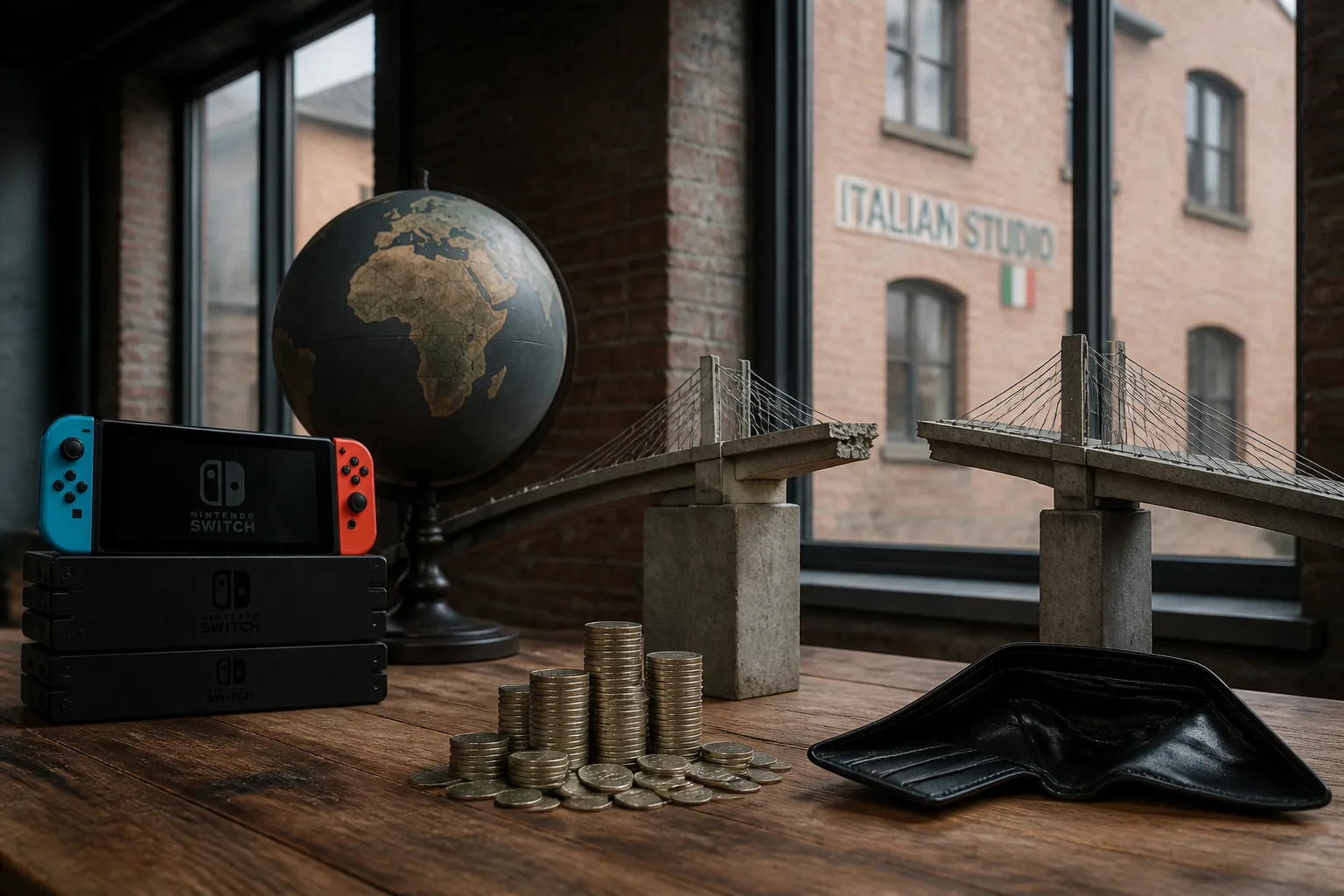
Italian Game Studios Grow, But Capital Gap Hinders Global Leap
From a handful of indie outfits in 2014 to a bustling ecosystem of more than 200 studios today, Italy’s video‑game sector has expanded rapidly—yet a persistent funding shortfall keeps it from becoming a true global contender.
A recent analysis by correspondent Luca Tremolada shows the industry has grown from 48 companies and a €20 million turnover in 2014 to over 200 studios, nearly 3,000 employees and annual revenues between €180 million and €200 million. The surge is largely the result of a steady stream of new projects and a deliberate pivot toward international markets. Still, the sector remains heavily self‑financed.
The eighth edition of First Playable, held in Florence in partnership with the Toscana Film Commission and Fondazione Sistema Toscana, brought together more than 500 participants—developers, publishers, investors and institutional representatives—to tackle the challenges of scaling Italian titles worldwide. The event underscored that 88 % of Italian studios still rely on internal resources to fund their games, a figure that highlights the scarcity of venture capital and specialised funds in the country.
IIDEA, the trade association that represents the Italian gaming industry, cited the 2021 tax credit for video‑game production as a historic turning point. The credit recognises games as a cultural and creative industry, and it has attracted investment, spurred studio growth and drawn new operators into the market. However, IIDEA’s director general, Thalita Malagò, warned that the credit alone cannot bridge the gap in a market where private capital is limited and competition is intense.
The report projects that Italy will launch more than 80 new titles in the next two years, including 62 that are entirely original. Yet, without sustained external funding, many studios remain at the independent level and struggle to transform into globally competitive businesses.
MediaInvest, a Brussels‑based European fund aiming to raise over €400 million for creative industries—including gaming—was one of the few investors present at First Playable. The fund’s participation signals growing interest, but the report notes that Italian studios still face a “capital gap” that restricts their ability to scale.
While the government’s tax incentive has helped expand the sector’s size and attract new entrants, analysts stress that it should be part of a broader industrial strategy that delivers predictable, continuous, and rapid support mechanisms. The current incentive framework, according to industry experts, is insufficient to cover the marketing, localisation and distribution costs that are essential for competing on the world stage.
Industry analysts point out that the Italian market’s growth is not matched by the same level of investment that fuels global leaders. The reliance on self‑financing means that many studios cannot afford the scale required to reach broader audiences.
First Playable also served as a showcase for upcoming titles and a networking hub for studios seeking partners. Although the event attracted international attention, the report concludes that without a significant increase in external funding, Italian developers will continue to face obstacles in achieving the reach they aspire to.
In summary, Italy’s video‑game industry has grown substantially in size, employment and revenue, and it is preparing a robust pipeline of new releases. However, the sector’s heavy reliance on internal financing and the limited availability of venture capital remain key obstacles to global competitiveness. The future of Italian gaming will hinge on securing additional investment and integrating the tax credit into a more predictable, comprehensive support framework.